Wednesday, March 23, 2022

A Bad Way Of Running A SQL Query In JDBC

An exception is thrown if there is ambiguity, i.e. more than one Parquet column is matched. This change also applies to Parquet Hive tables when spark.sql.hive.convertMetastoreParquet is set to true. The row and column delimiters may be any String , not just a single character. The export function is more general than just a table data exporter. Besides the trivial generalization that you may specify a view or other virtual table name in place of a table name, you can alternatively export the output of any query which produces normal text output. (This could actually even be multiple multiple-line SQL statements, as long as the last one outputs the needed data cells).

A bad way of running a SQL query in JDBC - An exception is thrown if there is ambiguity

When you Execute SqlTool with a SQL script, it also behaves by default exactly as you would want it to. If any error is encountered, the connection will be rolled back, then SqlTool will exit with an error exit value. If you wish, you can detect and handle error conditions yourself. For scripts expected to produce errors , you can have SqlTool continue-upon-error. For SQL script-writers, you will have access to portable scripting features which you've had to live without until now. You can use variables set on the command line or in your script.
A bad way of running a SQL query in JDBC - This change also applies to Parquet Hive tables when spark

You can handle specific errors based on the output of SQL commands or of your variables. You can chain SQL scripts, invoke external programs, dump data to files, use prepared statements, Finally, you have a procedural language with if, foreach, while, continue, and break statements. Note that the import command will not create a new table. This is because of the impossibility of guessing appropriate types and constraints based only on column names and a data sampling (which is all that a DSV-importer has access to). Therefore, if you wish to populate a new table, create the table before running the import.
A bad way of running a SQL query in JDBC - The row and column delimiters may be any String

The import file does not need to have data for all columns of a table. Since Spark 2.2.1 and 2.3.0, the schema is always inferred at runtime when the data source tables have the columns that exist in both partition schema and data schema. The inferred schema does not have the partitioned columns. When reading the table, Spark respects the partition values of these overlapping columns instead of the values stored in the data source files.

A bad way of running a SQL query in JDBC - The export function is more general than just a table data exporter

In 2.2.0 and 2.1.x release, the inferred schema is partitioned but the data of the table is invisible to users (i.e., the result set is empty). In Spark version 2.4 and below, you can create a map with duplicated keys via built-in functions like CreateMap, StringToMap, etc. In Spark 3.0, Spark throws RuntimeException when duplicated keys are found. You can set spark.sql.mapKeyDedupPolicy to LAST_WIN to deduplicate map keys with last wins policy.

A bad way of running a SQL query in JDBC - Besides the trivial generalization that you may specify a view or other virtual table name in place of a table name

Users may still read map values with duplicated keys from data sources which do not enforce it , the behavior is undefined. When calling stored procedures, always use parameter markers for argument markers instead of using literal arguments. When you execute a stored procedure as a SQL query, the database server parses the statement, validates the argument types, and converts the arguments into the correct data types. There is no need to use the CallableStatement object with this type of stored procedure; you can use a simple JDBC statement. In Spark version 2.4 and below, the parser of JSON data source treats empty strings as null for some data types such as IntegerType.

A bad way of running a SQL query in JDBC - This could actually even be multiple multiple-line SQL statements

For FloatType, DoubleType, DateType and TimestampType, it fails on empty strings and throws exceptions. Spark 3.0 disallows empty strings and will throw an exception for data types except for StringType and BinaryType. The previous behavior of allowing an empty string can be restored by setting spark.sql.legacy.json.allowEmptyString.enabled to true. In Spark 3.2, create/alter view will fail if the input query output columns contain auto-generated alias.

A bad way of running a SQL query in JDBC - When you Execute SqlTool with a SQL script

This is necessary to make sure the query output column names are stable across different spark versions. To restore the behavior before Spark 3.2, set spark.sql.legacy.allowAutoGeneratedAliasForView to true. The available parameters are determined automatically from the driver, and may change from version to version. They are usually not required, since sensible defaults are assumed.ValueA value for the given parameter.

A bad way of running a SQL query in JDBC - If any error is encountered

Parameters and their allowed values are somewhat database-specific. The links below may help, or if you upload your own JDBC Driver, consult the documentation that was provided with it. Spring Data query methods usually return one or multiple instances of the aggregate root managed by the repository. However, it might sometimes be desirable to create projections based on certain attributes of those types. Spring Data allows modeling dedicated return types, to more selectively retrieve partial views of the managed aggregates. The overhead for the initial execution of a PreparedStatement object is high.

A bad way of running a SQL query in JDBC - If you wish

The benefit comes with subsequent executions of the SQL statement. For example, suppose we are preparing and executing a query that returns employee information based on an ID. Using a PreparedStatement object, a JDBC driver would process the prepare request by making a network request to the database server to parse and optimize the query.

A bad way of running a SQL query in JDBC - For scripts expected to produce errors

If the application will only make this request once during its lifespan, using a Statement object instead of a PreparedStatement object results in only a single network roundtrip to the database server. Reducing network communication typically provides the most performance gains. When created once, they can be called by any database client, such as JDBC applications, as many times as it wants without the need for a new execution plan.

A bad way of running a SQL query in JDBC - For SQL script-writers

In version 2.3 and earlier, CSV rows are considered as malformed if at least one column value in the row is malformed. CSV parser dropped such rows in the DROPMALFORMED mode or outputs an error in the FAILFAST mode. Since Spark 2.4, CSV row is considered as malformed only when it contains malformed column values requested from CSV datasource, other values can be ignored. As an example, CSV file contains the "id,name" header and one row "1234". In Spark 2.4, selection of the id column consists of a row with one column value 1234 but in Spark 2.3 and earlier it is empty in the DROPMALFORMED mode.
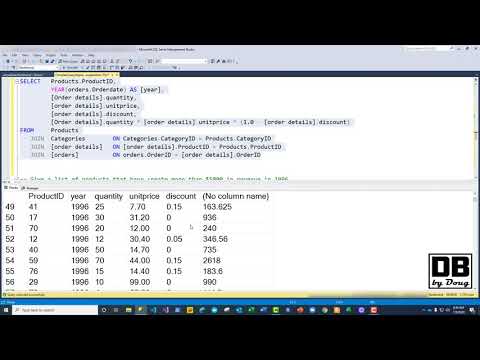
A bad way of running a SQL query in JDBC - You can use variables set on the command line or in your script

To restore the previous behavior, set spark.sql.csv.parser.columnPruning.enabled to false. In Spark 3.0, when inserting a value into a table column with a different data type, the type coercion is performed as per ANSI SQL standard. Certain unreasonable type conversions such as converting string to int and double to boolean are disallowed. A runtime exception is thrown if the value is out-of-range for the data type of the column. In Spark version 2.4 and below, type conversions during table insertion are allowed as long as they are valid Cast. When inserting an out-of-range value to an integral field, the low-order bits of the value is inserted(the same as Java/Scala numeric type casting).

A bad way of running a SQL query in JDBC - You can handle specific errors based on the output of SQL commands or of your variables

For example, if 257 is inserted to a field of byte type, the result is 1. The behavior is controlled by the option spark.sql.storeAssignmentPolicy, with a default value as "ANSI". Setting the option as "Legacy" restores the previous behavior. Since Spark 3.1, CHAR/CHARACTER and VARCHAR types are supported in the table schema. Table scan/insertion will respect the char/varchar semantic.

A bad way of running a SQL query in JDBC - You can chain SQL scripts

If char/varchar is used in places other than table schema, an exception will be thrown (CAST is an exception that simply treats char/varchar as string like before). To restore the behavior before Spark 3.1, which treats them as STRING types and ignores a length parameter, e.g. CHAR, you can set spark.sql.legacy.charVarcharAsString to true. By default, Livy has a limit of 1,000 rows on the result set of a query. It is not ideal to increase this limit since the result set is stored in memory, and increasing this limitation can lead to issues at scale in a memory restrictive environment like ours.

A bad way of running a SQL query in JDBC - Note that the import command will not create a new table

To solve this problem, we implemented AWS S3 redirection for the final result of each query. This way, large result sets can be uploaded to S3 in a multi-part fashion without impacting the overall performance of the service. On the client, we later retrieve the final S3 output path returned in the REST response and fetch the results from S3 in a paginated fashion.
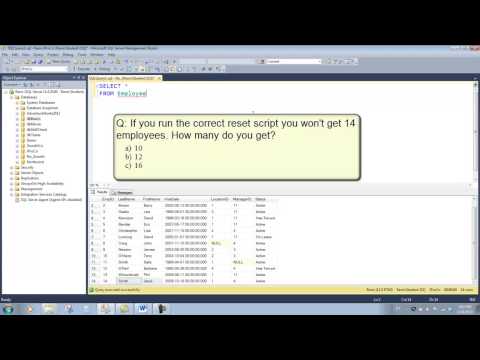
A bad way of running a SQL query in JDBC - This is because of the impossibility of guessing appropriate types and constraints based only on column names and a data sampling which is all that a DSV-importer has access to

This makes the retrieval faster without running the risk of S3 timeouts while listing the path objects. You can however not add operators operating on queries using database functions. The Slick Scala-to-SQL compiler requires knowledge about the structure of the query in order to compile it to the most simple SQL query it can produce.

A bad way of running a SQL query in JDBC - Therefore

It currently couldn't handle custom query operators in that context. An example for such operator is a MySQL index hint, which is not supported by Slick's type-safe api and it cannot be added by users. Although almost no JDBC application can be written without database metadata methods, you can improve system performance by minimizing their use. These particular elements of the SQL language are performance expensive. Next, we'll demonstrate how to call a stored procedure that returns one or more OUT parameters.

A bad way of running a SQL query in JDBC - The import file does not need to have data for all columns of a table

These are the parameters that the stored procedure uses to return data to the calling application as single values, not as a result set as we saw earlier. The SQL syntax used for IN/OUT stored procedures is similar to what we showed earlier. Due to wildly varying support and behavior of data and time types in SQL databases, SqlTool always converts date-type and time-type values being imported from DSV files using java.sql.Timestamps. This usually provides more resolution than is needed, but is required for portability.
A bad way of running a SQL query in JDBC - Since Spark 2

Therefore, questions about acceptable date/time formats are ultimately decided by the Java's java.sql.Timestamp class. Slick comes with a Scala-to-SQL compiler, which allows a sub-set of the Scala language to be compiled to SQL queries. Also available are a subset of the standard library and some extensions, e.g. for joins.

A bad way of running a SQL query in JDBC - The inferred schema does not have the partitioned columns

The fact that such queries are type-safe not only catches many mistakes early at compile time, but also eliminates the risk of SQL injection vulnerabilities. When implemented correctly, stored procedures produce the same results as prepared statements. 1The identifier property is final but set to null in the constructor. The class exposes a withId(…) method that's used to set the identifier, e.g. when an instance is inserted into the datastore and an identifier has been generated. The original Person instance stays unchanged as a new one is created.

A bad way of running a SQL query in JDBC - When reading the table

The same pattern is usually applied for other properties that are store managed but might have to be changed for persistence operations. With the design shown, the database value will trump the defaulting as Spring Data uses the only declared constructor. The core idea here is to use factory methods instead of additional constructors to avoid the need for constructor disambiguation through @PersistenceConstructor. Instead, defaulting of properties is handled within the factory method. 1PropertyAccessor's hold a mutable instance of the underlying object.

A bad way of running a SQL query in JDBC - In 2

This is, to enable mutations of otherwise immutable properties.2By default, Spring Data uses field-access to read and write property values. All subsequent mutations will take place in the new instance leaving the previous untouched.4Using property-access allows direct method invocations without using MethodHandles. The use of prepared statements with variable binding is how all developers should first be taught how to write database queries. They are simple to write, and easier to understand than dynamic queries. Parameterized queries force the developer to first define all the SQL code, and then pass in each parameter to the query later. This coding style allows the database to distinguish between code and data, regardless of what user input is supplied.

A bad way of running a SQL query in JDBC - In Spark version 2

Although programmatic updates do not apply to all types of applications, developers should attempt to use programmatic updates and deletes. Using the updateXXX methods of the ResultSet object allows the developer to update data without building a complex SQL statement. Instead, the developer simply supplies the column in the result set that is to be updated and the data that is to be changed. Then, before moving the cursor from the row in the result set, the updateRow method must be called to update the database as well. Many databases have hidden columns (called pseudo-columns) that represent a unique key over every row in a table. Typically, using these types of columns in a query is the fastest way to access a row because the pseudo-columns usually represent the physical disk address of the data.

A bad way of running a SQL query in JDBC - In Spark 3

Prior to JDBC 3.0, an application could only retrieve the value of the pseudo-columns by executing a Select statement immediately after inserting the data. The above code uses %s placeholders to insert the received input in the update_query string. For the first time in this tutorial, you have multiple queries inside a single string. To pass multiple queries to a single cursor.execute(), you need to set the method's multi argument to True.

A bad way of running a SQL query in JDBC - You can set spark

The Informix JDBC driver provides the Statement, PreparedStatement, and CallableStatement methods, which can be used to execute stored procedures. Which method you use depends on the characteristic of the stored procedure. For example, if the stored procedure returns a single value, you should use a JDBC Statement object.

A bad way of running a SQL query in JDBC - Users may still read map values with duplicated keys from data sources which do not enforce it

The following table provides some guidelines for what method to use for which stored procedure type. Suppose we have a JDBC application that needs to efficiently repeat a sequence of tasks again and again. We might think of using a Java™ method, but how many times do we want to do client/server communication to send and receive data? The database server will prepare and generate a query plan for every SQL statement sent by the application, which will consume some CPU time. While taking performance into consideration, using simple Java methods with single SQL statements may be a bad idea. How to use stored procedures varies from one database server to another.

A bad way of running a SQL query in JDBC - When calling stored procedures

A Database Management System such as Informix and DB2®, have different SQL syntax to execute stored procedures. This makes things difficult for application developers when they need to write code targeted to several DBMSes. A callable statement provides a method to execute stored procedures using the same SQL syntax in all DBMS systems. You can upload binary files such as photographs, audio files, or serialized Java objects into database columns.

A bad way of running a SQL query in JDBC - When you execute a stored procedure as a SQL query

SqlTool keeps one binary buffer which you can load from files with the \bl command, or from a database query by doing a one-row query for any non-displayable type . In the latter case, the data returned for the first non-displayable column of the first result row will be stored into the binary buffer. This is an inconvenience, since the database engine will change names in SQL to default case unless you double-quote the name, but that is server-side functionality which cannot be reproduced by SqlTool. You can use spaces and other special characters in the string. JSON data source will not automatically load new files that are created by other applications (i.e. files that are not inserted to the dataset through Spark SQL).

A bad way of running a SQL query in JDBC

For a DataFrame representing a JSON dataset, users need to recreate the DataFrame and the new DataFrame will include new files. Since Spark 2.3, when all inputs are binary, functions.concat() returns an output as binary. Until Spark 2.3, it always returns as a string despite of input types. To keep the old behavior, set spark.sql.function.concatBinaryAsString to true. In Spark 3.0, when the array/map function is called without any parameters, it returns an empty collection with NullType as element type.

A bad way of running a SQL query in JDBC - In Spark version 2

Friday, January 21, 2022

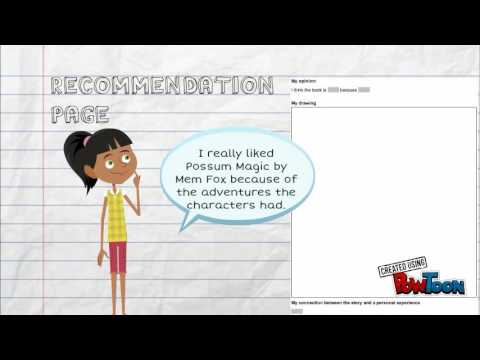
What Does Book Review Example Mean

It is important to know the kind of audience even if you are reviewing only a part of the book since it will give you an idea of what kind of language to use. You should then read the chapter of the book once again and afterward, reevaluate its content. When you are reading the chapter and taking notes, always leave some space between the lines, so you can later add ideas or correct any misunderstandings that your readers might experience. It is also important to mention that you should remember that it is the book chapter review that you are writing – not a critique or summary.

what does book review example mean - It is important to know the kind of audience even if you are reviewing only a part of the book since it will give you an idea of what kind of language to use

Keep in mind your target audience and be careful of what information you include. Make sure you don't overload the paper with your personal opinions. There is no strict pattern for writing book reviews. Guiding the book reviewer's writing process, however, are the three essential objectives of relating what is said in the book, how it is said, and how true and significant it is.

what does book review example mean - You should then read the chapter of the book once again and afterward

As with the planning of a composition, make a list of possible material to use in the review-ideas, responses, information, examples. Study this material to decide what to include in the book review and what proves extraneous. Put the items to include in a suitable order-for instance, from greater to lesser importance.

what does book review example mean - When you are reading the chapter and taking notes

Once the material is organized, a controlling idea for the review emerges; this controlling idea may form the topic sentence of the review, and provides guidance for achieving coherence and focus throughout. Use the topic sentence, in varied forms, in the beginning and end of the review. Traditionally, book reviews are written evaluations of a recently published book in any genre.

what does book review example mean - It is also important to mention that you should remember that it is the book chapter review that you are writing  not a critique or summary

Usually, around the 500 to 700-word mark, they offer a brief description of a text's main elements while appraising the work's overall strengths and weaknesses. Published book reviews can appear in newspapers, magazines, and academic journals. They provide the reader with an overview of the book itself and indicate whether or not the reviewer would recommend the book to the reader. Pay particular attention to the author's concluding chapter. List the principal topics, and briefly summarize the author's ideas about these topics, main points, and conclusions. If appropriate and to help clarify your overall evaluation, use specific references and quotations to support your statements.

what does book review example mean - Keep in mind your target audience and be careful of what information you include

If your thesis has been well argued, the conclusion should follow naturally. It can include a final assessment or simply restate your thesis. Do not introduce new information or ideas in the conclusion. If you've compared the book to any other works or used other sources in writing the review, be sure to cite at the end of your book review. A review is a critical essay, a report and an analysis.

what does book review example mean - Make sure you dont overload the paper with your personal opinions

Whether favorable or unfavorable in its assessment, it should seem authoritative. The reviewer's competence must be convincing and satisfying. A book review is a description, critical analysis, and an evaluation on the quality, meaning, and significance of a book, not a retelling.

what does book review example mean - There is no strict pattern for writing book reviews

It should focus on the book's purpose, content, and authority. A critical book review is not a book report or a summary. It is a reaction paper in which strengths and weaknesses of the material are analyzed. It should include a statement of what the author has tried to do, evaluates how well the author has succeeded, and presents evidence to support this evaluation.

what does book review example mean - Guiding the book reviewer

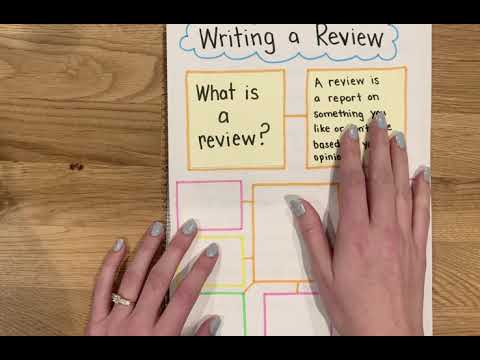
A book review is a form of literary criticism in which a book is merely described or analyzed based on content, style, and merit. A book review may be a primary source, opinion piece, summary review or scholarly review. Books can be reviewed for printed periodicals, magazines and newspapers, as school work, or for book web sites on the Internet. A book review's length may vary from a single paragraph to a substantial essay. Such a review may evaluate the book on the basis of personal taste. Some assignments may ask you to write a review of a book or journal article.

what does book review example mean - As with the planning of a composition

A book report summarizes the contents of the book, but a book review is a critical analysis of the book that describes, summarizes, and critiques the ideas in the book. A review is a means of going beyond the literal content of a source and is a tool for connecting ideas from a variety of academic sources. A review provides an objective analysis of ideas, support for opinions, and a way to evaluate your own opinions. A book review addresses the subject matter of a literary work, and assesses effectiveness and value. Book reviews keep publishers and the public aware of what is being thought and written in a wide range of subjects.

what does book review example mean - Study this material to decide what to include in the book review and what proves extraneous

When a new book is issued, copies are sent to reviewers; subsequent reviews appear in literary magazines, academic journals, newspapers, and other periodicals. People everywhere depend on book reviews to direct them in their reading; many readers buy what commentators give particular attention. Competent reviewers are the best counselors for readers attempting to keep up with intellectual and aesthetic developments in the literary arts. Since some libraries can't buy books unless they have been reviewed and many individuals won't buy books unless they have read a review, reviewing books can definitely advance your field. Indeed, scholars in smaller fields sometimes get together and assign books for review so that every book published in their field is reviewed somewhere.

what does book review example mean - Put the items to include in a suitable order-for instance

Just remember that book reviews do not "count" as much on a curriculum vitae as an academic essay. If you are doing more than two book reviews a year, you may be spending too much time on book reviews and not enough on your other writing. The necessary amount of summary also depends on your audience. If you are writing book reviews for colleagues—to prepare for comprehensive exams, for example—you may want to devote more attention to summarizing the book's contents. If, on the other hand, your audience has already read the book—such as a class assignment on the same work—you may have more liberty to explore more subtle points and to emphasize your own argument. There is a good market for the newcomer in book reviewing.

what does book review example mean - Once the material is organized

Many editors, including those of big-name magazines, do not like to use the same reviewer too often, and this means unknown, unpublished reviewers have good opportunities to break into the field. Send query letters to editors to find out what their publication needs are. Stay current with new books, and read other book reviews.

what does book review example mean - Use the topic sentence

Once an assignment for a review is given, produce timely, quality work, specific to requirements set by the editor. Build publication credits with a variety of periodicals; pursue possibilities of starting a regular column for a single newspaper or magazine. Book reviewing is not generally a highly profitable venture, but money can be made, depending on a reviewer's qualifications, reputation, and dedication to the field. While the terms are often used interchangeably, there are clear differences in both the purpose and the format of the two genres.

what does book review example mean - Traditionally

Generally speaking, book reports aim to give a more detailed outline of what occurs in a book. A book report on a work of fiction will tend to give a comprehensive account of the characters, major plot lines, and themes contained in the book. At their highest expression, book reviews are written at the college level and by professional critics.

what does book review example mean - Usually

Before exploring what exactly goes into this written piece and what tricks you can use to make it interesting and captivating, let us get to a less thrilling topic of rules of essay writing. As any other academic essay, a review will contain an introduction, the main body, and a conclusion. Unlike in argumentative or descriptive essays, the body may not be that much structured into arguments and evidence as it will be a flow of your opinion. But no matter what you should have an introductory section, the main section and a summary that drives your message home – 'read it or skip it, my dear reader'. This workshop aids students in actually writing and publishing a book review for a peer-reviewed journal. Students also form small groups to discuss the book each plans to review.At the second meeting, students bring a draft of their book review for exchange and feedback.

what does book review example mean - Published book reviews can appear in newspapers

At the third meeting, students arrive with a final version of their essay to submit to an editor for publication. If you want more formal instruction, you can follow the general guidance provided in the instructions for authors in the journal Economic Geography. For examples of published book reviews, look at the back of most major Geography journals in the Department or College libraries, where you will find Book Review sections. Do some online search to find internet resources with book reviews. Choose the examples that you think are relevant to your topic and effective to your writing.

what does book review example mean - They provide the reader with an overview of the book itself and indicate whether or not the reviewer would recommend the book to the reader

What Is Book Review Example Save several reviews that deserve more attention than the rest. Ask yourself what it is that you like about this or that work, as well as come up with a way to discuss the same issues in a unique way in your own review. Maybe you're impressed with all those accurate characters' descriptions, virtuous plot summaries, or writing styles that all seem to have a confident voice. Or, perhaps, you are swayed by controversial or humor-based reviews.

What Is Book Review Example

Finally, maybe only book chapter reviews with a serious tone are the ones to keep your attention. Whatever it is that you choose to use as your inspo, feel free to apply all these techniques to make your own writing stronger and more successful. Let's check four steps that you have to take one at a time in order to write a reliable book chapter review. But before that, it is worth noting that it's never a good idea to begin writing the review with no preparation. You should begin by writing a rough draft, consisting of all your notes taken while were reviewing the chapter. Before writing the draft, you could also outline your future review.

what does book review example mean - List the principal topics

Write down your ideas in the order that they should appear in the paper. This should be then followed by overviewing the chapter and asking yourself a few questions the answer to which will help you to understand the chapter better. One such question is what the title of the chapter promises it will explore and the audience that the book is targeting. A critical book review is a thoughtful discussion of a text's contents, strengths, and limitations.

what does book review example mean - If appropriate and to help clarify your overall evaluation

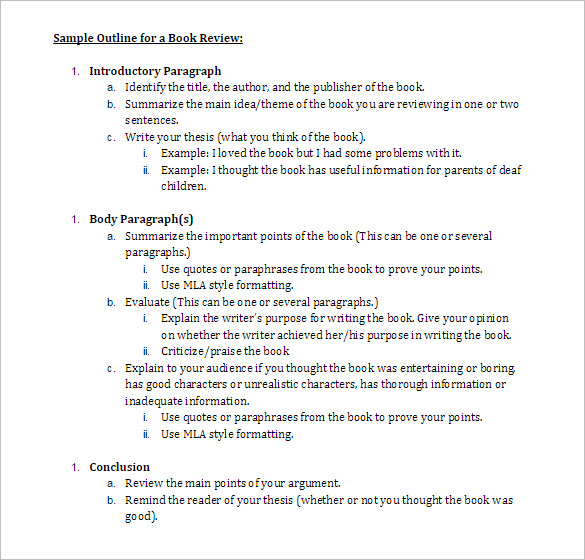
A book review should reflect your capacity to read critically and to evaluate an author's arguments and evidence. Compose your review as you would any essay, with an argument supported by evidence, and a clear, logical structure. The primary focus of a book review is supplied in the beginning paragraph.

what does book review example mean - If your thesis has been well argued

After this main idea is established, it needs to be developed and justified. Using an organized list of material, the reviewer details the reasons behind the response to the book. References to past history, causes and effects, comparisons and contrasts, and specific passages from the book help illustrate and exemplify this main idea. The summary should also provide some orientation for the reader. Given the nature of the purpose of a review, it is important that students' consider their intended audience in the writing of their review.

what does book review example mean - It can include a final assessment or simply restate your thesis

Readers will most likely not have read the book in question and will require some orientation. This is often achieved through introductions to the main characters, themes, primary arguments etc. This will help the reader to gauge whether or not the book is of interest to them.

what does book review example mean - Do not introduce new information or ideas in the conclusion

It's natural for young readers to confuse book reviews with book reports, yet writing a book review is a very different process from writing a book report. Frequently, the purpose of book reports is to demonstrate that the books were read, and they are often done for an assignment. This student's review avoids the problems of the previous two examples. It combines balanced opinion and concrete example, a critical assessment based on an explicitly stated rationale, and a recommendation to a potential audience.

what does book review example mean - If you

The reader gets a sense of what the book's author intended to demonstrate. Moreover, the student refers to an argument about feminist history in general that places the book in a specific genre and that reaches out to a general audience. The example of analyzing wages illustrates an argument, the analysis engages significant intellectual debates, and the reasons for the overall positive review are plainly visible.

what does book review example mean - A review is a critical essay

The review offers criteria, opinions, and support with which the reader can agree or disagree. In contrast, article reviews are typically more focused. The author disagrees with the conclusions of an article and presents a counterargument and a criticism of the original paper. I well remember one of these from my grad school days. One article came out claiming the first synthesis of a tetracoordinate square planar silicon compound, one of the goals of my research.

what does book review example mean - Whether favorable or unfavorable in its assessment

However, the authors' evidence was not a crystal structure determination but a space group determination that they argued indicated the correct symmetry for the novel structure. In the next issue of the journal a review of the article appeared arguing that a space group determination was useless for determining molecular symmetry. Published alongside the review was the authors' response which maintained that the reviewer, instead of countering their argument, had furnished powerful support in favor of it.

what does book review example mean - The reviewer

But this is the usual pattern of a scholarly review of an article—a critique of the original article, followed by a response from the authors. For example, you are reviewing a book on the history of the development of public libraries in nineteenth century America. The book includes a chapter on the role of patronage by affluent women in endowing public libraries in the mid-to-late-1800s. The author argues that the history of public library patronage, and moreover, of cultural patronage, should be re-read and possibly re-framed given the evidence presented in this chapter. As a book reviewer you will be expected to evaluate this argument and the underlying scholarship.

what does book review example mean - A book review is a description

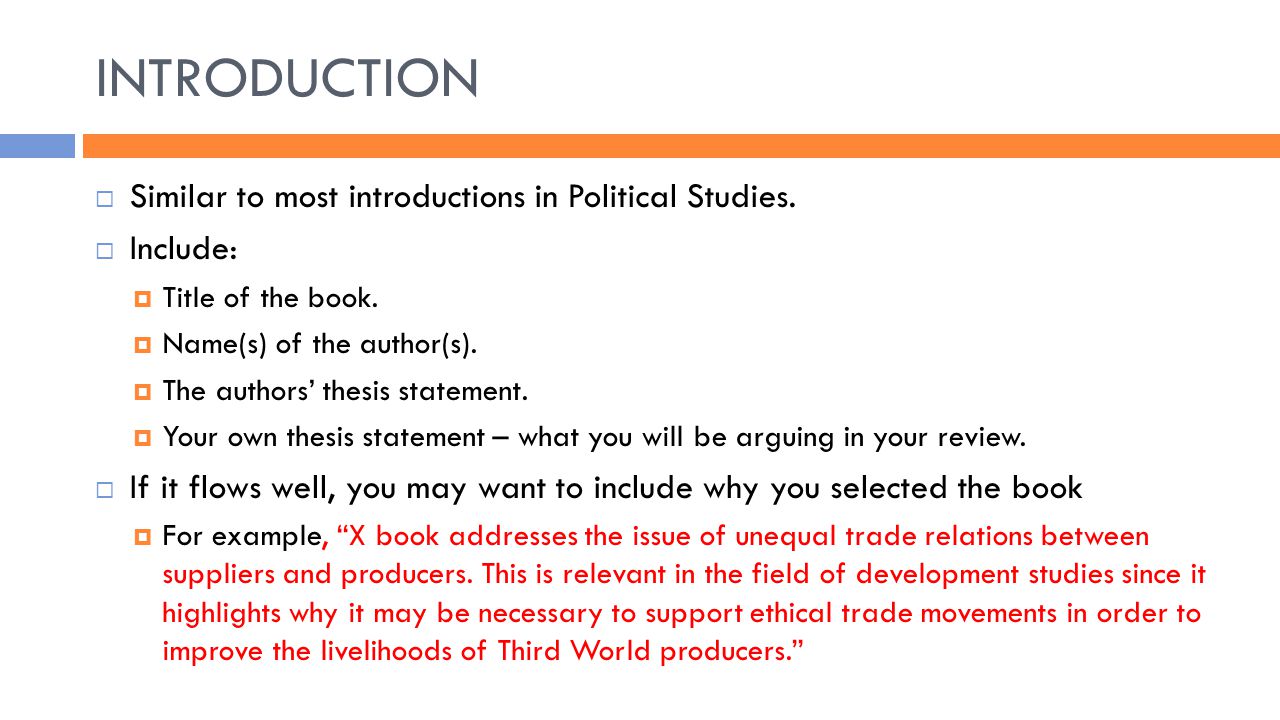
Like most pieces of writing, the review itself usually begins with an introduction that lets your readers know what the review will say. The first paragraph usually includes the author and title again, so your readers don't have to look up to find the title. You should also include a very brief overview of the contents of the book, the purpose or audience for the book, and your reaction and evaluation.

what does book review example mean - It should focus on the book

Think about what kind of book would be most useful to you in writing your dissertation, finalizing a paper for publication, or passing your exams. Since book reviews do take time, like any writing, it is best to chose a book that will work for you twice, as a publication and as research. Although the traditional book review is of one book, editors will often welcome book reviews that address two or more related books–called a review essay. I have reported elsewhere the results that I found when I sent an electronic questionnaire on reading and writing book reviews to groups of academics in the arts, sciences and social sciences . The discipline of writing book reviews offers students opportunities to develop their writing skills and exercise their critical faculties. Book reviews can be valuable standalone activities or serve as a part of a series of activities engaging with a central text.

what does book review example mean - A critical book review is not a book report or a summary

I Have A Java Annotation Which Takes A String Constant As A Argument , How Can I Pass A String Variable To The Same?

' intrinsic takes the two values to compare as its first and second operands. The return type, the values to check, and the vector mask ...